Source: SFATURI ORTODOXE
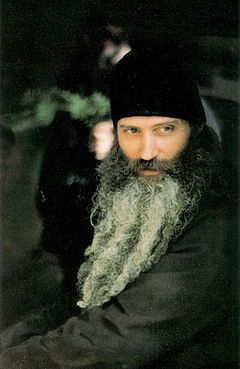
From a lecture delivered by Hieromonk Seraphim Rose at the 1979 St. Herman Summer Pilgrimage Platina, CA
 |
IT IS WELL known that Protestants spend a great deal of time on Holy Scripture, because for them it is everything. For us Orthodox Christians the Scripture also holds an essential place. Often, however, we do not take advantage of it, and do not realize what importance it has for us; or if we do, we often do not approach it in the right spirit because the Protestant approach and Protestant books about the Scriptures are widespread, while our Orthodox approach is quite different.
The fact that Scripture is an essential part of our Faith can be seen in our Orthodox services. There are daily readings from the New Testament from both the Epistles and Gospels. In one year we read through almost the entire New Testament. In the first three days of the week before Pascha--the feast of Christ's Resurrection, the four Gospels are read in church, and on Thursday night of Passion Week twelve long selections from the Gospels are read concerning the Passion of our Lord, with verses sung in between, commenting on these passages. The Old Testament is also used in the services. In the vespers for every great feast three parables are read prefiguring the feast. And the Divine services themselves are filled with Scriptural quotations, Scriptural allusions and inspiration coming directly from Holy Scripture. Orthodox Christians also read the Scripture outside the services. St. Seraphim, in his monastic life, read the entire New Testament every week. Perhaps it is because we have such a richness of Scripture in our Orthodox tradition that we are often guilty of taking them for granted, of not valuing and making use of the Scriptures.
One of the leading interpreters of Holy Scripture for us is St. John Chrysostom, an early 5th century Holy Father. He wrote commentaries on practically the whole of the New Testament, including all of St. Paul's epistles and also many Old Testament books. In one sermon concerning Scripture, he addresses his flock:
'I exhort you, and I will not cease to exhort you to pay heed not only to what is said here, but when you are home also you should occupy yourselves attentively with the reading of Holy Scripture. Let no one say to me such cold words-worthy of judgment---as these: 'I am occupied with a trial, I have obligations in the city, I have a wife, I have to feed my children, and it is not my duty to read the Scripture but the duty of those who have renounced everything.' What are you saying?! It is not your duty to read Scripture because you are distracted by innumerable cares? On the contrary, it is your duty more than those others, more than the monks; they do not have such need of help as do you who live in the midst of such cares. You need treatment all the more, because you are constantly under such blows and are wounded so often. The reading of Scripture is a great defense against sin. Ignorance of the Scripture is a great misfortune, a great abyss. Not to know anything from the word of God is a disaster. This is what has given rise to heresies, to immorality; it has turned everything upside down."
 |
Here we see that the reading of Holy Scripture provides us with a great weapon in the fight against the worldly temptations surrounding us – and we do not do enough of it. The Orthodox Church, far from being against the reading of Scripture, greatly encourages it. The Church is only against the misreading of Scripture, against reading one's own private opinions and passions, even sins into the sacred text. When we hear that the Protestants are all excited about something that they say is in the Scripture--the rapture, for example, or the millennium--we are not against their reading the Scripture but against their misinterpretation of the Scripture. To avoid this pitfall ourselves we must understand what this sacred text is and how we should approach it.
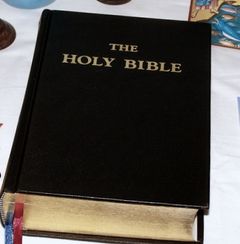
The Bible --the Holy Scripture, the Old and New Testaments---is not an ordinary book. It is one that contains not human but divinely revealed truths. It is the word of God. Therefore, we must approach it with reverence and contrition of heart, not with mere idle curiosity and academic coldness. Nowadays one cannot expect a person who has no sympathy for Christianity, no sympathy for the Scriptures to have a proper attitude of reverence. There is, however, such power in the words of Scripture--especially in the Gospels-that it can convert a person even without this proper attitude We have heard of cases in communist countries; the police go out in special squads to persecute believers and break up their meetings; they confiscate all their literature: Bibles, hymn books, patristic texts---many written out by hand. They're supposed to burn them, but sometimes either the person who is assigned to bum them or the person collecting them gets curious and begins reading the condemned materials. And there have been cases where this has changed the person's life. All of a sudden he meets Jesus Christ. And he's shocked, especially if he has been raised with the notion that this is a great evil; here he discovers that there is no evil here but rather something quite fantastic.
Many modern scholars approach the Scriptures with a cold, academic spirit; they do not wish to save their souls by reading Scripture: they only want to prove what great scholars they are, what new ideas they can come up with; they want to make a name for themselves. But we who are Orthodox Christians must have utmost reverence and contrition of heart; i.e., we must approach the word of God with a desire to change our hearts. We read the Scripture in order to gain salvation, not, as some Protestants believe, because we are already saved without the possibility of falling away, but rather as those desperately trying to keep the salvation which Christ has given us, fully aware of our spiritual poverty. For us, reading Scripture is literally a matter of life and death. As King David wrote in the Psalms: Because of Thy words my heart hath bee, afraid. I will rejoice in Thy sayings as one that hath found great spoil.
The Scripture contains truth, and nothing else. Therefore, we must study the Scripture believing in its truth, without doubt or criticism. If we have this latter attitude we shall receive no benefit from reading Scripture but only find ourselves with those "wise" men who think they know more than God's revelation. In fact, the wise of this world often miss the meaning of Scripture. Our Lord prayed: I thank Thee, O Father ..that Thou hast hid these things from the wise and prudent and hast revealed them unto babes (Luke 10:21). In our approach we must not be sophisticated, complicated scholars; we must be simple. And if we are simple the words will have meaning for us.

